An
early action song from the East Coast, expressing the joy
and anxieties of love.
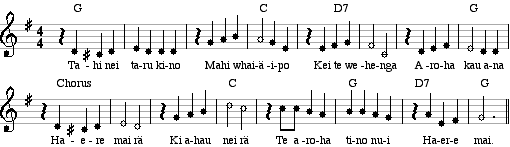
Tahi nei taru kino
Mahi whai-ā-ipo
Kei te wehenga
Aroha kau ana
Chorus:
Haere mai rā
Ki ahau nei rā
Te aroha tino nui
Haere mai
He aha kei taku uma
Pākikini nei ?
He aroha rānei?
He aha rānei?
Titiro atu au
Tahuri kē koe
Kei roto i a koe
Pïrangi mai ana
Kore ua e noho
Hoatu taku ringa
Kei huri kē koe
Whakakaitoa i muri
Like a pesky weed
you play at love
and when parted
love is no more
Chorus:
Come then
to me
for great is (my) love.
Come (to me)
What is this within my chest
that pinches so?
Is it love?
Or what is it?
When I look (at you)
you turn away
(but) within you
there is much longing
I will not sit still
I give (you) my hand
in case you turn away
to jest later.
Our
thanks to Toby Rikihana for these lyrics and their
translation.
Indigestion!
Verse 2 is usually not sung these days. The
rhetorical question "He aha kei taku uma
Pākikini nei ?" "What is this pain in my Chest?" is likely
to be met with derisive comments about "Tokopā !"
(Indigestion)
In the above Youtube video, Kiri sings verses 1-4-3-4
And this is how the verses are arranged on some popular
CDs:
Inia Te Wiata: 1-4-3
Kiri Sings Maori: 1-4-4-4
Kia Ora: 1-4-1-4
Aotearoa Maori Chorale: 1-3-4-1
Heritage of Maori Song: First verse only.
The way the song is usually sung, and pronounced, is shown
on the printable songsheet.
Comments
Here are comments from some of the CDs:
Kiri: Paraire Tomoana's song of
flirtation - it expresses the joys and sorrows of
love, and the effect they have on a person who cannot
quite identify these strange feelings of joy and
anxiety combined. Some Maori people jokingly translate
the song as "Is this love, or is it indigestion?"
Inia Te Wiata: This famous song expressing the
joys and sorrows of love, was written by the late
Paraire Tomoana of Ngati Kahungunu, but like many
another song, it owes much of its popularity to the
Arawa people, with whom it has always been a
favourite.
Aotearoa Maori Chorale: . . . a lively love-song
which became popular during the Second World War.
Our
thanks to Marge Austin of Rocky River for this waiata
CD research.
Pronunciation
This is the way these words are pronounced on the
Kiri CD, as close as I can get to them.
whaiāipo, whai-ā-i-po, "fie ARE
ee por."
aroha
kau, a-ro-ha kau.
In
this song, "are RAW ha KAR-W."
In ordinary speech, aroha
is "ARE raw ha."
kore ua e, ko-re ua e, "core RARE
wa AIR."
whakakaitoa i muri wha-ka-kai-(toa i)
mu-ri "far CAR kye TOY mu ri"
Kei roto i a koe, Kei ro-(to i) a
ko-e, "kay ROAR toy ARE cor eh."
This song on record
A quick search of the National
Library catalogue in April 2002 located about 30
recordings of Tahi nei taru kino. These range from
orchestral and opera versions, to Hawaiian and party music.
A sample:-
1930s, Ana Hato and Deane Waretini,
1945 , Johnny Wade and his Hawaiians,
1955, Bill Wolfgramm and His Islanders,
1959, New Zealand Concert Party,
1965, Sam Freedman,
1966, Inia Te Wiata, bass opera singer,
1966, Putiki Maori Club Choir, 1966
1967, The Apaapa Sisters,
1971, Turakina Maori Girls' College,
1984, Daphne Walker, with Bill Sevesi and his
Islanders,
1984, Ashley Heenan pianist, with soloists, chorus and
orchestra,
1988, 25 solid gold Maori songs,
1980s, The Great Kiwi party tape (Rugby,racing
and beer...),
1990s, Kiri Te Kanawa, soprano opera singer,
1990s, Ngāti Pöneke 1930s and 1940s songs,
1999, Traditional music of the Maori: historical
collection,
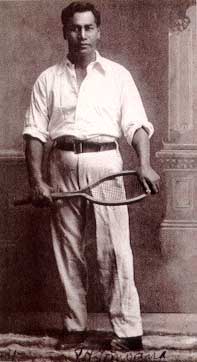
Paraire Tomoana
Paraire
Tomoana was born in Hawke's Bay in about 1875. Composer,
publisher, Ngati Kahungunu and Ngati Te Whatu-i-apiti
leader. His secondary education was at Te Aute College,
alongside of Apirana
Ngata and Peter Buck. He was prominent in the Young
Maori Party.
Despite having been born with a club foot, Pariare
excelled in sport, representing Hawke's Bay in tennis,
cricket and hockey, and for more than 10 years was the
undefeated champion at the NZ Maori golf tournament. He
was appointed All Black coach in 1904.
He married twice. His first marriage had ended by
1912. The following year he married Kuini Ripeka
Raerena, aged 19. Paraire courted her by singing an
early version of Pökarekare
Ana to her and her Ngati Porou elders.
During WWI helped raise funds for the Maori Soldiers'
Fund by organising a song and dance group (Te Poi o
Heretaunga) which performed at Wellington, Trentham and
Auckland, including his compositions Hoea Ra Te Waka
Nei, and E Pari
Ra (1918 - the famous tangi for soldiers lost in
battle). His songs reflected the modern European 'action
song' style, moving away from the ancient chant rhythm
of waiata and patere. Among his compositions are Te
Ope Tuatahi, Poi Waka and Tahi Nei
Taru Kino.
As well as composing action songs, Paraire was an
accomplished writer and translator, a commentator on
ancient waiata, and was well versed in Maori history and
lore. Pariare was a remarkable man because he did so
many things and did them comprehensively. He was not a
dabbler.
 Paraire
Tomoana was born in Hawke's Bay in about 1875. Composer,
publisher, Ngati Kahungunu and Ngati Te Whatu-i-apiti
leader. His secondary education was at Te Aute College,
alongside of
Paraire
Tomoana was born in Hawke's Bay in about 1875. Composer,
publisher, Ngati Kahungunu and Ngati Te Whatu-i-apiti
leader. His secondary education was at Te Aute College,
alongside of