13
Willow Lane
Ohakune
4625
22
August 2022
Dear
Te Ipukarea
Research Institute people
I
have been building the https://www.folksong.org.nz website
for the past 25 years. It has been a retirement hobby to keep
my mind stimulated, and it has helped give young New
Zealanders a sense of communal identity, while educating older
ones in the riches of their culture, especially older Maori. To
my continued astonishment, this website's 550 webpages (some
very large) have attracted more than half a million visits in
the past 12 months: 90% to the Maori pages, 55% people with
cellphones, 15% who are overseas (mostly Maori) and 33% in
Auckland.
I
seem to have created a significant national educational
asset.
Due
to two significant recent events I am now seeking your help:
(A) for
the last 12 years, Actrix/Voyager internet has kindly hosted
the site’s Gigabyte of data and delivered an annual million
webpages all for free, but since the beginning of winter I
have had to make an automatic payment of $190 a month to
keep the site online.
(B)
I am now 81. I
had a brain seizure recently, and another would mean I could
no longer maintain this site, and when I die the monthly
payments will stop and all my research will disappear.
I
would be grateful if your institute could take over the
internet hosting of this site, plus the improvement,
development and extension of its webpages,
especially the moteatea ones, and the routine updating of its
main pages.
My background
I
had a 1940s childhood in the remote and close-knit Pakeha
farming community of Mangamahu, with lots of communal singing.
My aunt had taught upriver at Jerusalem, and taught me the
well-known Maori songs of the time. In the 1950s
I was shown how to translate any language when learning Latin
and French at a Catholic boys high school. In the 1960s
I was persuaded to become a teaching Marist Brother - taught
in Auckland, Wellington, Christchurch Fiji, learnt Fijian and
spent time in remote pre-European-style villages. As a
maths/science teacher, I learnt how to express complex ideas
simply and logically to 10-17 year-old kids.
In
the mid-1970s I was teaching at St Pauls College, Ponsonby: I
was
burnt-out and totally alienated. In 1979 I
left the Brothers and the big cities, found a semi-rural job,
joined the local folk club, sang songs about the rural Pakeha
life of my childhood, learned techniques for writing similar
vivid songs about my Mangamahu childhood and its sense of
community. This gave me back my sense of identity and
community. Others sang my songs too. I discovered lots of us
had all been part of that alienating "Drift To The
Cities.”
My website
In
1998 I started Folksong.org.nz to
get these songs out to others who may had been
also feeling alienated. The
webpage for each song included lyrics,
chords, tune, background info and
images about the work/war/events/names the
song refered to, word and tune variants,
a biography of
the songwriter, and recordings made
of the song.
In
1999 Kiri Te Kanawa released her “operatic” CD “Kiri
Sings Maori” and I started getting requests from opera fans
in France and Germany to make a similar descriptive webpage
about the “NZ folksong Pokarekare Ana si
vous plais" - and Me
He Manu Rere" - and Te Tarakihi” - and E Papa Waiari” -
and - and - and….” So I did. I used the rather
loose translations in Rikihana’s
song book.
Some
of the songs had a
long history with versions
for lovers, school choirs, international pre-schoolers and
drunken party nights. I covered all this history in full.
Then
Maori kids emailed me asking to do the same with songs I had
never heard before, songs that were not in Rikihana’s book. So
used the skills I had used translating other languages and my
knowledge of Fijian grammar, and to help me I assembled all
the online Maori/Polynesian dictionaries I could find on one
webpage, plus search boxes to all 19th century Maori writing
collections online.
I
discovered that people were using my translations to learn new
words, so I
tried to put my translations in word-for-word
but fluent English by
using different colours, like
this.
| E
rere ra, te Matangi Ki waho tara ma Ki reira ra koe, hine E arohatia nei e. |
Sail
on, Matangi to beyond our mountain peaks. You are there below them, oh girl, so loved by me here on this ship. |
I
discovered 10 gradually changing versions of Matangi,
chronicling the “Drift to the Cities” of Maori from the 1920s to
the 2000s. As I added more and more songs, I discovered these
songs also chronicled the unification of the races, from the
bitterness of the Waikato invasion to Po
Atarau/Now is the Hour as
a worldwide number one song. I made a slide show of this process
for a singalong lecture.
My
webpages were built to enliven school projects, and I have
arranged the Kiwi and Maori songs together by topic, for
schoolteachers.
I have been surprised to find the same dangerous events vividly detailed in compositions by both cultures.
I have been surprised to find the same dangerous events vividly detailed in compositions by both cultures.
https://folksong.org.nz/65_ton_hooker/index.html
https://folksong.org.nz/whakataka_te_hau/index.html#tua
https://folksong.org.nz/whakataka_te_hau/index.html#tua
I have also arranged the Maori and Kiwi songs together on a map of Aotearoa, so that people can find songs of their own region.
By
keeping information about significant New Zealand songs all
together - traditional and contemporary Maori and Pakeha mostly,
plus Cook Island, Korean and Samoan ones - I hope to help
unite our cultures. I am
continually adding songs and background information about more
recent and current events.
Moteatea
I
am mostly interested in the stories communicated by the songs, and
that led me to the study of moteatea. Google
Search has been invaluable finding the background stories
connected to the brief quotations and references in these works
of Maori literature. My
most rewarding study has been of Pinepine
Te Kura. I spent six months examining it word-by-word,
line-by-line. Pinepine covers
Tahitian ancestry, defensive horticulture, fables about personal
growth, references to past tribal misdeeds and guilt, nutritional
medicine, the importance of seafoods and tītī for good health, and
the use of right-brain group psychotherapy for mental health. That
led me to the extraordinary modified versions of Pinepine and
other old moteatea that Te Kooti composed to seek support to his
cause. Te Kooti's symbolic use of the Matuhi’s bird-call led me on
another whole group of similar birdcall unity songs.
In
unearthing the layers of meaning in an old moteatea, I have found
it useful to compare all the published versions, and all the
translations. I have done this for Te Kooti’s Kaori
Hoki, for Te
Tai o Honipaku, and for Toia
Tainui Tapotu
I
have not put many formal academic source references on these
webpages,as I discovered it was not worth the effort. I have
published only two papers; my letter to The Listener about the
origins of Pokarekare
Ana was
shamelessly plagarised without acknowledgement by a Vic Music Dept
lecturer, while my carefully referenced thesis on the origins of Ka
Mate, which I spent 12 months researching, and finding about
20 different versions going back 700+ years, has been completely
ignored by Wellington academics who don’t understand that truth
conveyed in a brief legend differs from facts recorded in reams of
documents.
Thus a lecture given at AUT on the ancient “U poko” version of Ka Mate was published in 1854, when you were still called the Auckland Mechanics' Institute and after we moved to Waiouru, where I became the Army’s photojournalist, I spent spent a lot of time on the Army’s marae and on several oother remote marae, witnessing that ancient U poko Ka Mate performed at one of them.
Thus a lecture given at AUT on the ancient “U poko” version of Ka Mate was published in 1854, when you were still called the Auckland Mechanics' Institute and after we moved to Waiouru, where I became the Army’s photojournalist, I spent spent a lot of time on the Army’s marae and on several oother remote marae, witnessing that ancient U poko Ka Mate performed at one of them.
I
have arranged these moteatea in historical order, so they bring
our history alive, from the time of the voyaging waka to the
resisting of colonial theft of land and culture.
https://www.folksong.org.nz/explore_moteatea/
https://www.folksong.org.nz/explore_moteatea/
This
historical study and sequencing of moteatea is still a work in
progress, and I was hoping your students could extend this work
over the coming decades.
I
await your reply with hope.
Thank you
John Archer
Ngati Tumatauenga
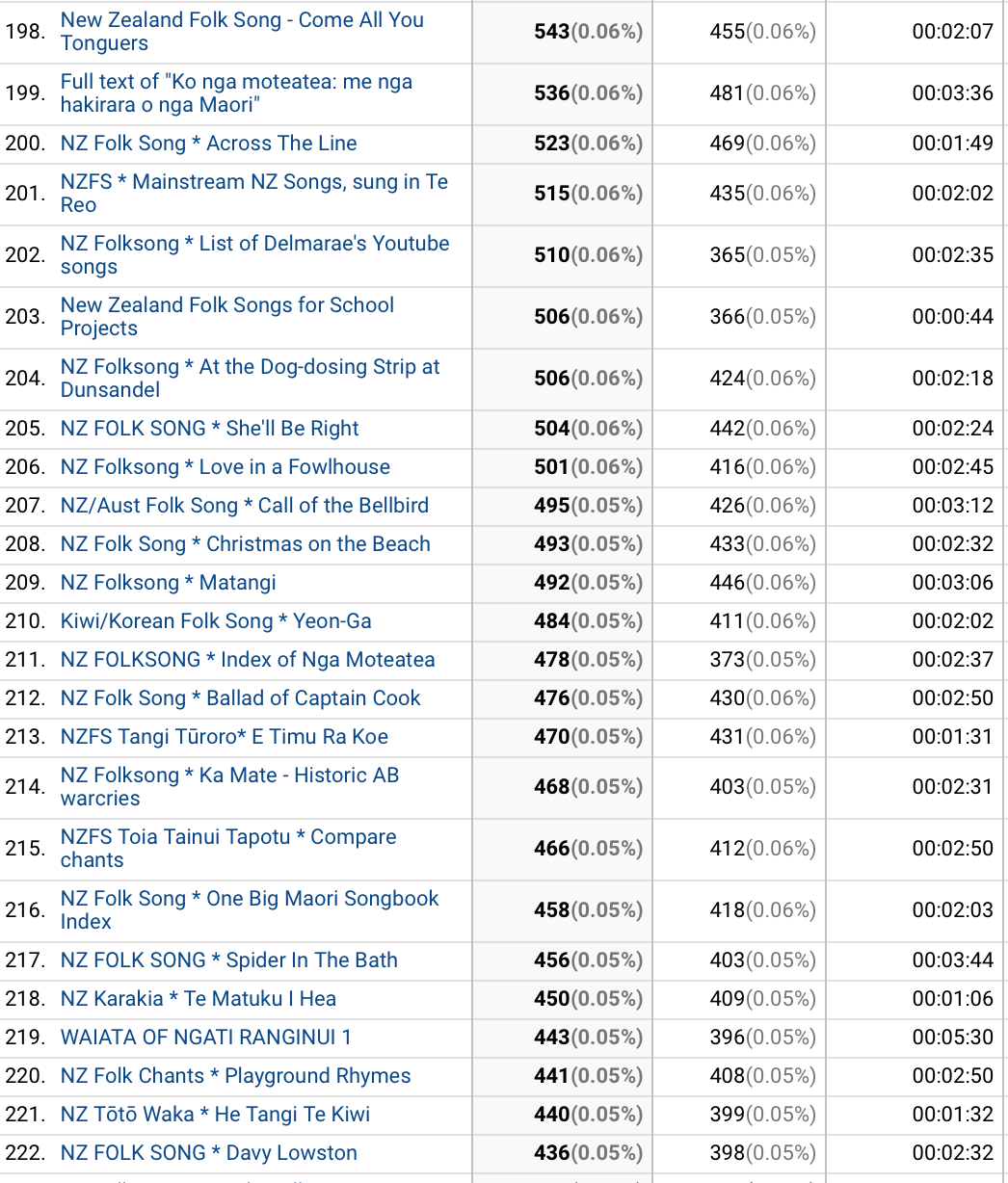
STATS FOR THE LAST 12 MONTHS
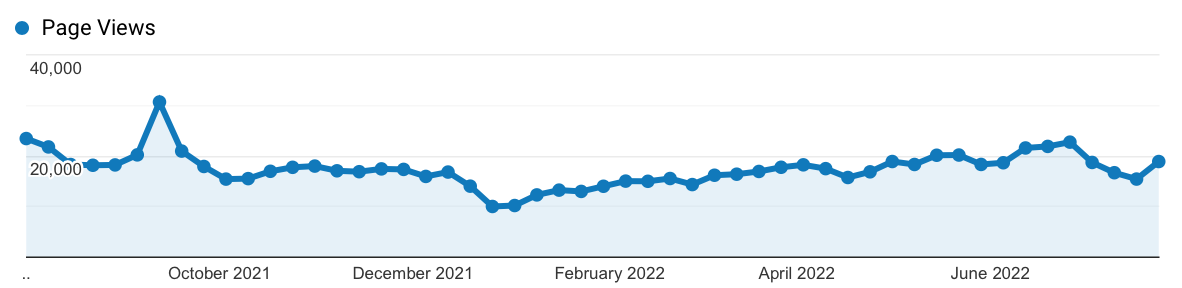
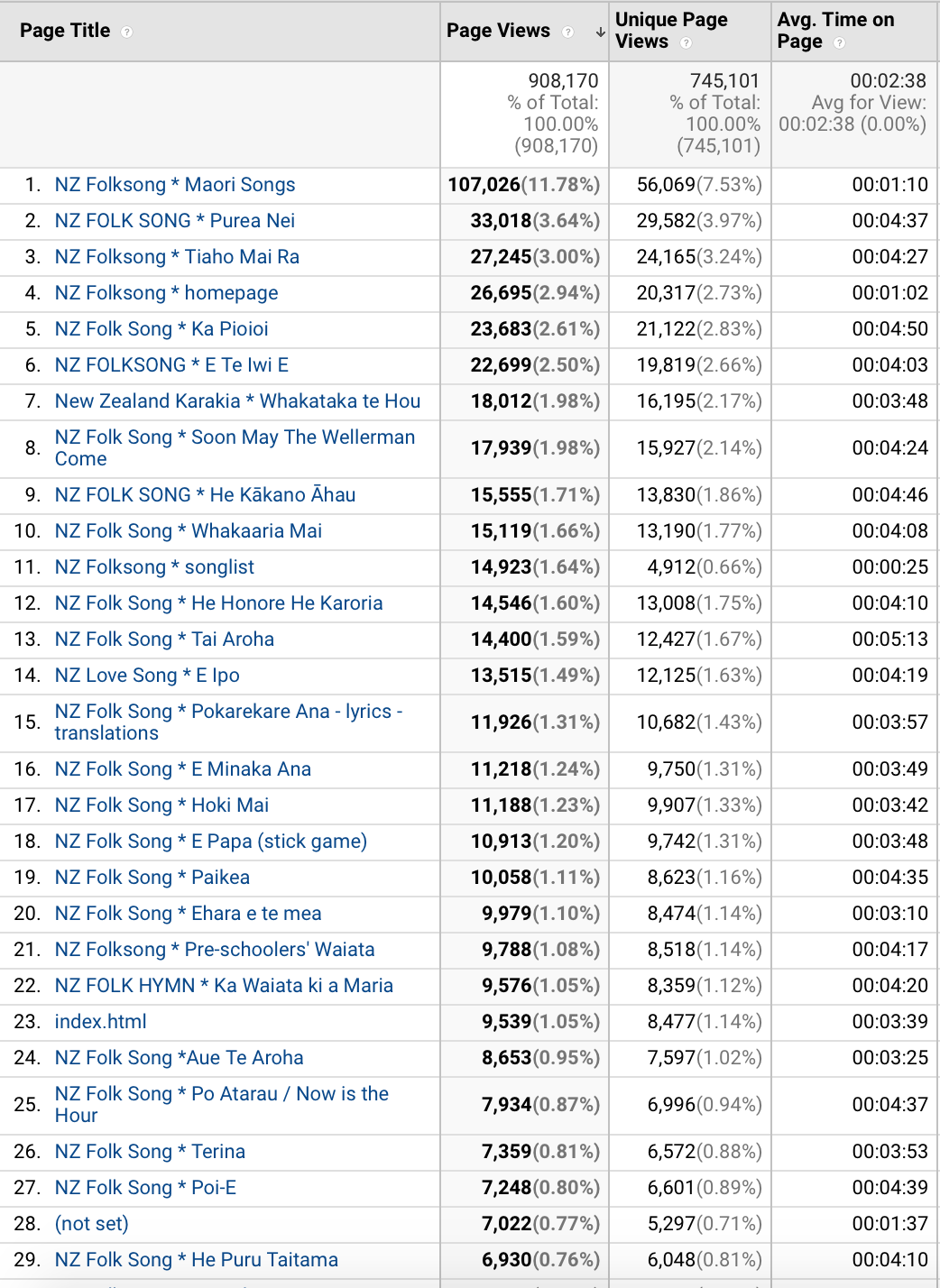
TYPICAL
PAKEHA SONG STATS